
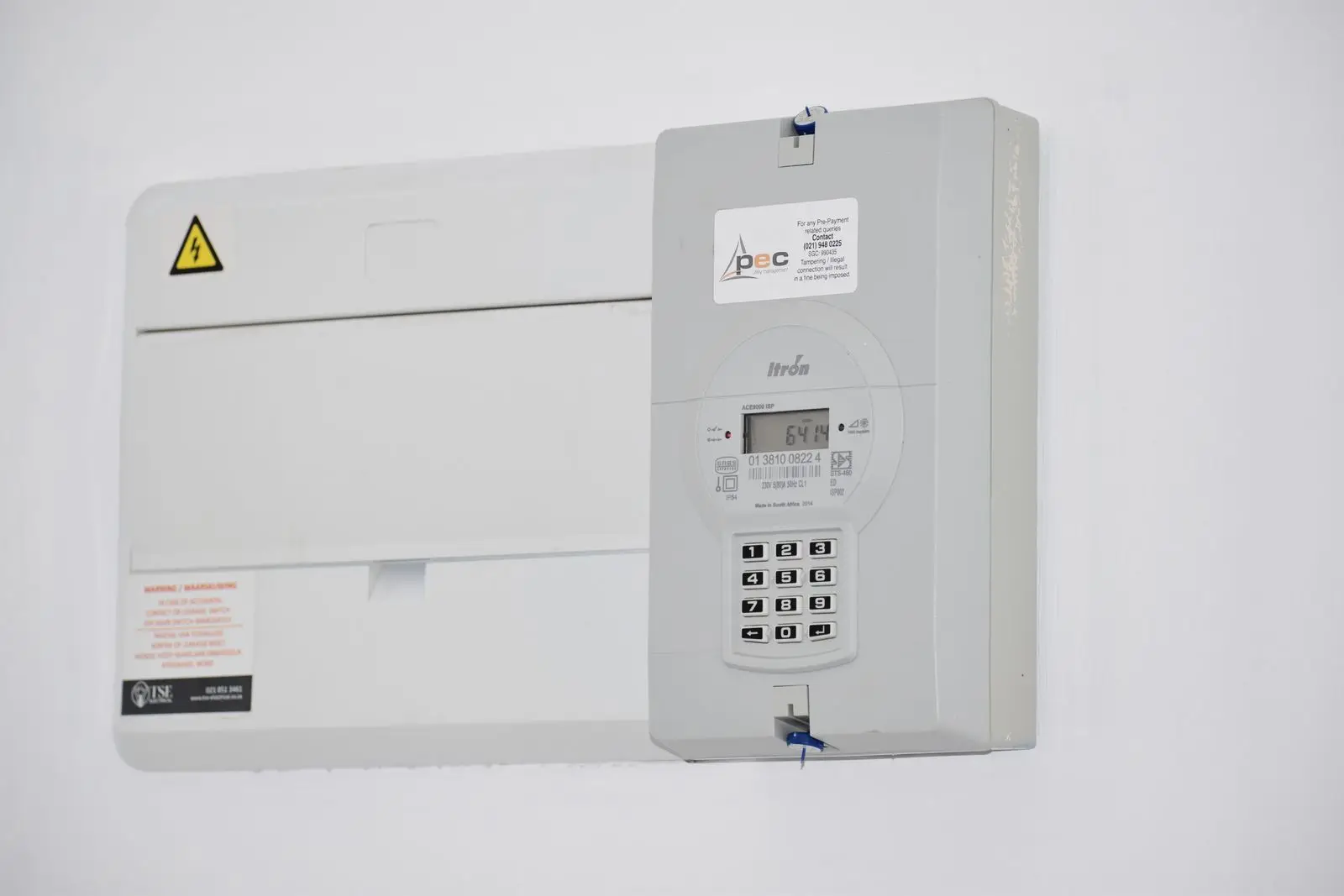
Under the Metering Point Operation Act (MsbG), the digital electricity meter is a modern metering device (§ 2 sentence 1 no. 15 MsbG): it measures electronically and displays consumption, but sends nothing itself, so as a rule it still has to be read. Only a smart meter gateway makes it an intelligent metering system (§ 2 sentence 1 no. 7 MsbG) that transmits readings securely. The gas rollout follows later.
This article explains clearly which devices exist, what they show, whether you still need to read them and how data protection is handled, for electricity and gas.
Modern metering device: the digital meter
The modern metering device (mME) is a purely digital electricity meter. It measures consumption electronically and shows it on a display. Besides the current reading, historical values can usually be retrieved - for example consumption for the last days, weeks and months, often up to two years back. These extended displays are generally protected by a PIN. The mME has no external communication link, though; it does not send any data on its own.
Intelligent metering system: mME plus gateway
An intelligent metering system (iMSys) - the actual smart meter - consists of a modern metering device and an additional smart meter gateway. The gateway is the communication module: it transmits the readings in encrypted form to the authorised parties (such as the metering point operator and energy supplier) and can take on further tasks, for example integrating controllable consumption devices.
Whether you receive an mME or an iMSys depends mainly on consumption. The iMSys becomes mandatory, among other things, at an annual consumption of more than 6,000 kWh (§ 29 MsbG). The details - and who decides in the owners’ association - are explained in the article on smart meters in a condominium.
Digital gas meters
Digitalisation does not only affect electricity. Gas meters are increasingly digital too. A digital gas meter can be connected via a smart meter gateway - often via the same gateway that also serves the electricity meter. This allows electricity and gas consumption to be transmitted together. The gas rollout, however, follows the electricity rollout in time; in many households the gas meter remains a classic device for now.
Do you still have to read the meter?
That depends on the device:
- Intelligent metering system: manual reading is no longer needed because the values are transmitted automatically.
- Modern metering device without gateway: a self-reading or a periodic reading by the metering point operator may still be required, because the device does not send the data itself.
Data protection and security
With the intelligent metering system, the smart meter gateway is the security-critical component. It is certified by the German Federal Office for Information Security (BSI) and built to strict protection profiles. Communication is encrypted and star-shaped, and the principle of data minimisation applies: only the data needed for the respective purpose - such as billing - is transmitted.
What it means for owners and the condominium
For most households, little changes in everyday life: the meter is replaced, reading becomes more convenient, and the consumption display becomes more transparent. It gets more interesting as soon as a heat pump, wallbox or photovoltaics come into play - then an intelligent metering system is usually a prerequisite. These connections are explored in the article on wallboxes, load management and PV in a condominium.
Sources
Editorial responsibility: digo.immo Verwaltung & Invest - certified residential property manager under § 26a WEG (IHK Frankfurt), licence under § 34c GewO. About the certification
This article provides general information only and does not replace individual legal advice. It was created with AI assistance; the legal statements have been checked against the official texts of the law. Legal status: 28/08/2026; laws and case law may change. No warranty is given as to completeness, accuracy or timeliness. When in doubt, please seek qualified advice.