
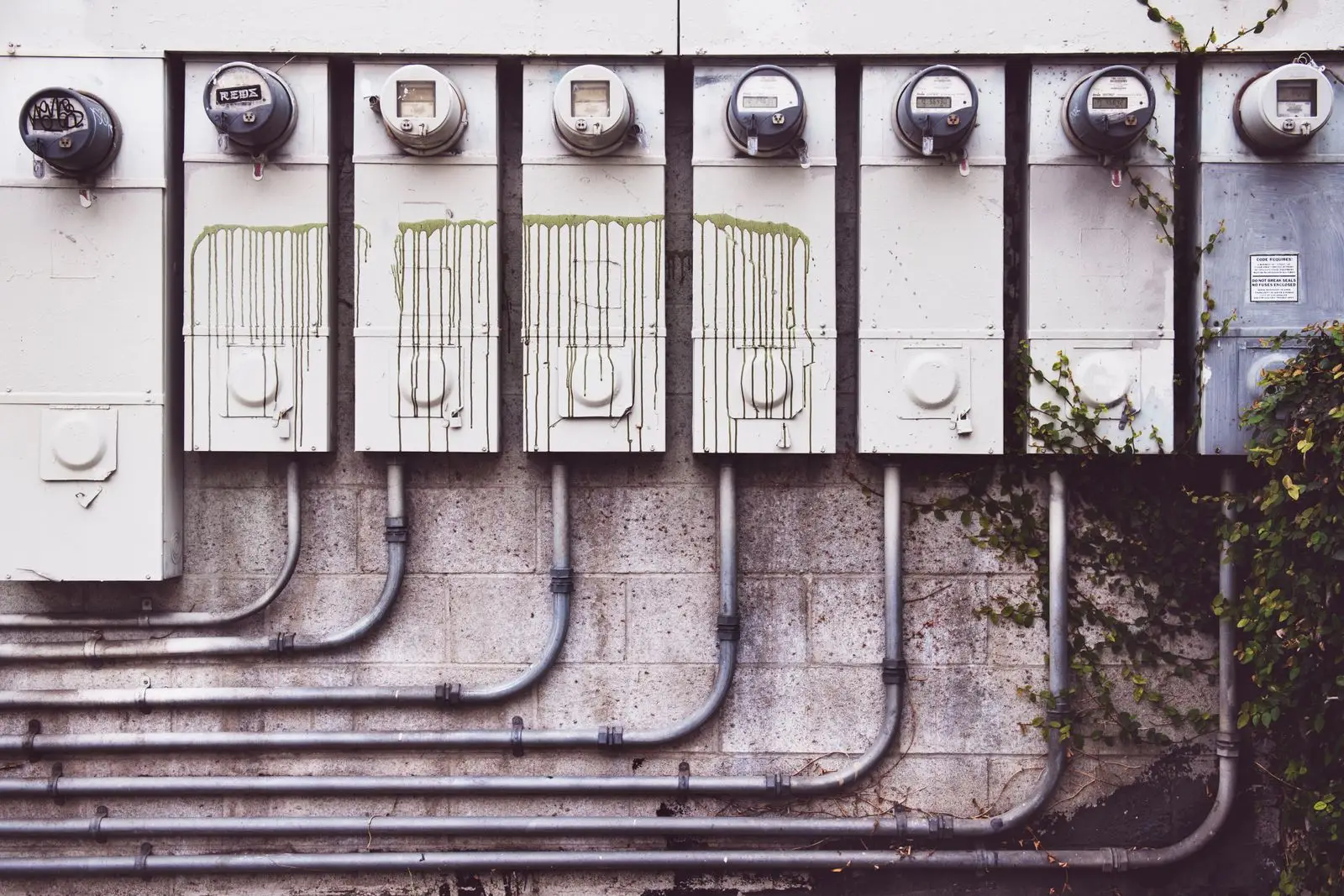
Under the Metering Point Operation Act (MsbG), the responsible metering point operator installs the intelligent metering system (§ 29 (1)), not the owners’ association. It is mandatory above 6,000 kilowatt hours annually, under an agreement pursuant to § 14a of the Energy Industry Act (EnWG) and for installations above 7 kilowatts (§ 29 (1) no. 1 and no. 2). The staged rollout runs to 2032, only where economically justifiable (§ 45, § 30 MsbG).
That Act was significantly accelerated in 2023 by the Act to restart the digitalisation of the energy transition. This guide sorts out the terms and the statutory obligations for the association.
Modern metering device or intelligent metering system?
Two terms are central and are often confused:
- A modern metering device (mME) is a digital electricity meter. It replaces the old Ferraris meter with the spinning disc, shows consumption and stored historical values on a display - but has no communication link.
- An intelligent metering system (iMSys), colloquially a smart meter, is a modern metering device plus a smart meter gateway. This gateway transmits the readings in encrypted form and enables further functions, for example connecting controllable consumption devices.
When is a smart meter mandatory?
The law distinguishes between mandatory and optional installation. An intelligent metering system is mandatory in two core cases (§ 29 MsbG):
| Case | Threshold |
|---|---|
| Final consumers with high electricity consumption | more than 6,000 kWh per year |
| Generation plants or controllable consumption devices | more than 7 kW of installed capacity |
Below these thresholds, households receive a modern metering device as part of the rollout. A smart meter can, however, also be requested voluntarily.
Agile rollout: what the metering point operator may do
To get the rollout moving, § 31 MsbG allows an agile rollout: the metering point operator may also install intelligent metering systems at lower thresholds - for consumption up to 100,000 kWh and generation plants up to 25 kW. Individual functions need not be present at installation but can be delivered by update by the end of 2025 at the latest.
Who installs and who decides?
Installation is the responsibility of the responsible metering point operator, usually the local grid operator - not the owners’ association. The association can therefore neither prevent the rollout nor must it commission it itself. It can, however, request the voluntary installation of an iMSys, for example where a heat pump or charging infrastructure is to be operated.
Cost and price caps
Statutory price caps apply to the annual cost (§ 30 MsbG), graduated by consumption and installation situation. They are billed to the connection user or final consumer. In a condominium it must be distinguished whether a metering point belongs to the common-area electricity (shared, e.g. stairwell lighting, lift) or to the individual property of a flat.
Special case: controllable consumption devices
Anyone operating a heat pump or a wallbox is often directly affected: such controllable consumption devices within the meaning of § 14a EnWG generally require an intelligent metering system and in return enable a reduced grid fee. How this interacts with charging infrastructure and load management is covered in the article on wallboxes, load management and PV in a condominium.
Data protection and security
The smart meter gateway is the central component, certified by the German Federal Office for Information Security (BSI). It ensures encrypted, star-shaped communication and follows the principle of data minimisation - only the data needed for the respective purpose is transmitted.
Conclusion
The smart meter rollout is under way, controlled by the metering point operator and staggered by consumption and capacity. For the condominium this means staying informed, keeping an eye on the common-area electricity and actively planning the installation of an iMSys for a heat pump or charging infrastructure. The terminology of the devices is explored in our article on digital electricity and gas meters.
Sources
Editorial responsibility: digo.immo Verwaltung & Invest - certified residential property manager under § 26a WEG (IHK Frankfurt), licence under § 34c GewO. About the certification
This article provides general information only and does not replace individual legal advice. It was created with AI assistance; the legal statements have been checked against the official texts of the law. Legal status: 28/08/2026; laws and case law may change. No warranty is given as to completeness, accuracy or timeliness. When in doubt, please seek qualified advice.