
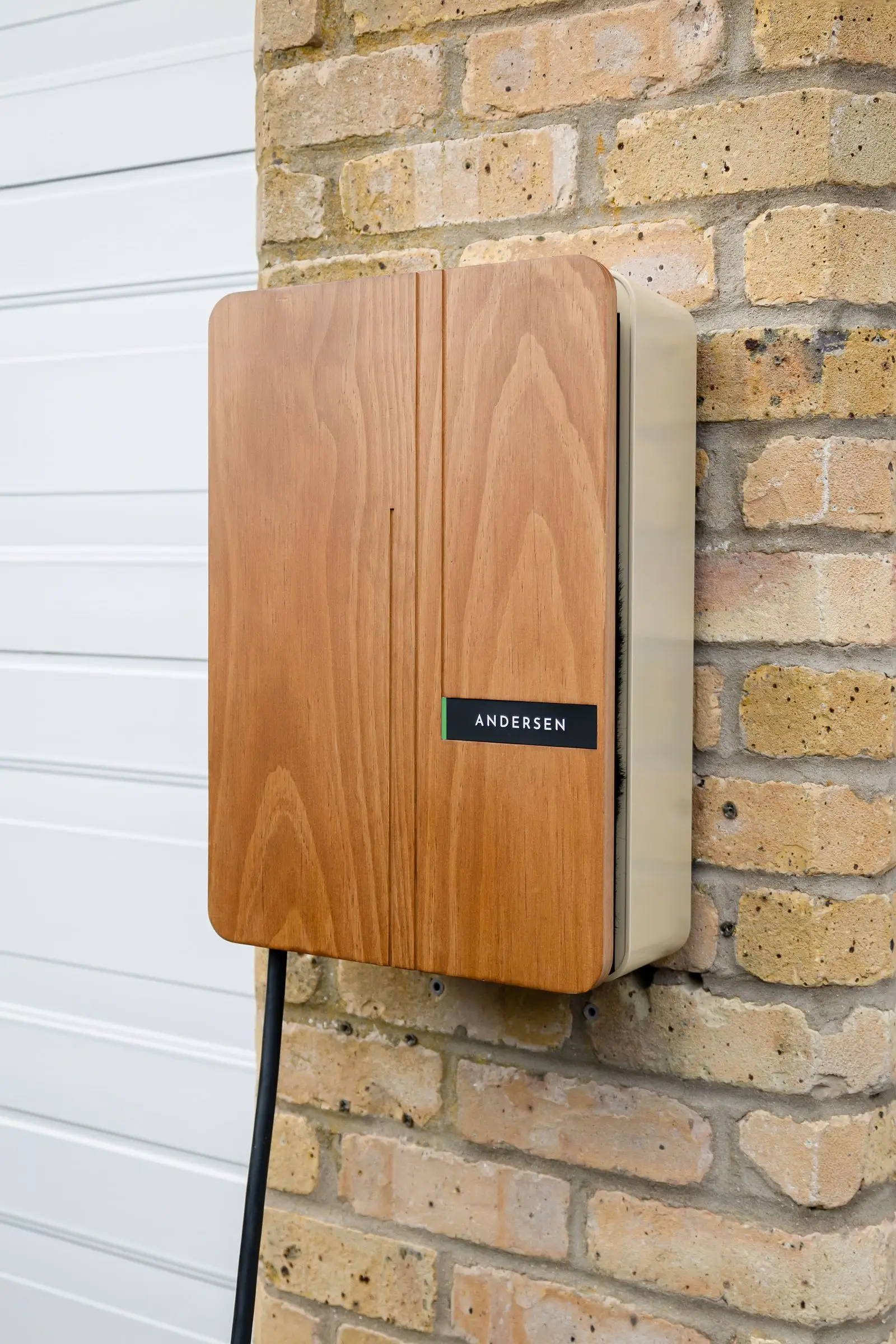
Every owner in a German owners association (WEG) may demand a reasonable structural alteration serving electric vehicle charging (§ 20 (2) no. 2 WEG). The association resolves on the implementation, within proper administration (§ 20 (2) sentence 2 WEG). Barred is anything fundamentally reshaping the complex or, compared with the others, unfairly disadvantaging an owner who has not consented (§ 20 (4) WEG). By law, whoever demanded the wallbox bears the cost (§ 21 (1) WEG).
This guide brings the legal and technical basics together: why several charge points need load management, what § 14a of the Energy Industry Act (EnWG) means for a wallbox and a heat pump, and what applies to the balcony power plant.
The right to a charging option
Since the 2020 WEG reform, charging infrastructure is privileged: every owner may demand reasonable structural alterations that serve the charging of electrically powered vehicles (§ 20 (2) no. 2 WEG). This means there is no longer any need to argue about the whether - the right exists in principle. The association decides on the how, that is on the specific and reasonable way of implementation (for example the technical solution and the location).
Several wallboxes: why load management?
A building’s service connection supplies only a limited amount of electrical power. A single wallbox is usually unproblematic. But if several owners want to charge, simultaneous charging can quickly exceed the available capacity - with the result that the fuse trips or the connection has to be reinforced at great expense.
This is where load management comes in. It distributes the available power intelligently across the charge points:
- Static load management divides a fixed total capacity among the wallboxes.
- Dynamic load management additionally takes the rest of the building’s consumption into account in real time and makes optimum use of free capacity.
For a condominium, a shared, expandable load management concept is almost always the more economical solution because it allows later charge points to be added without expensive grid reinforcement.
§ 14a EnWG: controllable consumption devices
Wallboxes and heat pumps above 4.2 kW count as controllable consumption devices within the meaning of § 14a EnWG. The rule is a trade-off:
- The grid operator may temporarily reduce (dim) the power of such devices in rare congestion situations so that the electricity grid remains stable.
- In return, operators receive a reduced grid fee.
This generally requires an intelligent metering system. How the smart meter rollout works is explained in the article on smart meters in a condominium.
Costs and resolution questions
Whoever demands a structural alteration generally also bears the costs and may use the installation (§ 21 (1) WEG). If a single owner demands a wallbox, construction and operation are generally at their expense. If, on the other hand, the association resolves on a shared charging infrastructure for everyone, the law allocates the cost, not the resolution: if the resolution reaches more than two thirds of the votes cast and half of all co-ownership shares, all owners bear the cost in proportion to their shares, unless the installation involves disproportionate cost; the same applies if the cost amortises within a reasonable period (§ 21 (2) WEG). In all remaining cases only the owners who resolved on the installation bear the cost (§ 21 (3) WEG). The association may resolve a deviating allocation (§ 21 (5) sentence 1 WEG), but it may not thereby impose costs on an owner who does not have to bear them under subsections 1 to 3 (§ 21 (5) sentence 2 WEG). Cleanly drafted resolutions are decisive here; the systematics as a whole are explained in the guide to structural alterations in a condominium.
Balcony power plant and photovoltaics
Generating electricity is now privileged too: electricity generation by plug-in solar devices - the balcony power plant - has been one of the privileged structural alterations since 2024 (§ 20 (2) no. 5 WEG). Every owner thus has a right in principle; the association may set requirements for proper and safe execution. Plug-in solar devices must be registered with the grid operator and in the market master data register.
Larger rooftop photovoltaic systems or tenant electricity models, by contrast, are not privileged individual measures but a matter for the association: they are resolved on, financed and operated collectively.
Conclusion
Electric mobility and solar are well secured legally in the condominium: a charging option and a balcony power plant are privileged, and the association steers the execution. Technically, forward-looking load management and - for controllable devices - an intelligent metering system are the decisive building blocks. Those who plan an expandable concept early save money and disputes later on.
Sources
Editorial responsibility: digo.immo Verwaltung & Invest - certified residential property manager under § 26a WEG (IHK Frankfurt), licence under § 34c GewO. About the certification
This article provides general information only and does not replace individual legal advice. It was created with AI assistance; the legal statements have been checked against the official texts of the law. Legal status: 28/08/2026; laws and case law may change. No warranty is given as to completeness, accuracy or timeliness. When in doubt, please seek qualified advice.